
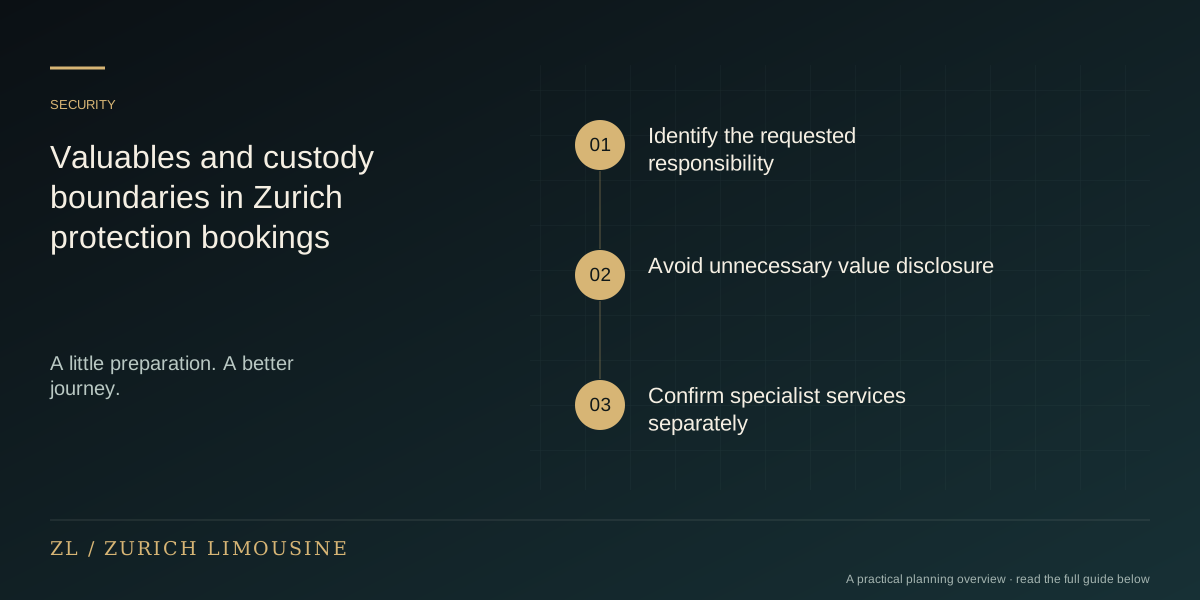
Identify the requested responsibility
Explain whether the client simply carries personal belongings or wants another person to hold, store or transport items on their behalf. Those are different arrangements. The provider should review any custody request explicitly rather than discover at the end of a meeting that responsibility for valuable property has been assumed. Tell the coordinator before the visit if this is an essential requirement rather than an optional request that can be declined.
Avoid unnecessary value disclosure
An initial enquiry generally does not need photographs, account information or detailed inventories of valuable items. If specialist arrangements are required, establish the appropriate process with the relevant provider first. Share only the information needed for that agreed purpose and keep unrelated financial or personal records out of routine scheduling messages. The client can describe the category of requested service without placing an unnecessary inventory into a widely shared appointment schedule.
Confirm specialist services separately
Packing, secure storage, specialist transport and insurance should be discussed with the providers responsible for them. A bodyguard’s hourly charge does not automatically include those services or insure an item. Obtain clear written acceptance of any additional arrangement, including who holds the item and what responsibilities have been agreed. If the proposed provider cannot accept the requested responsibility, arrange an alternative before making the item part of the day’s programme.
Record handovers appropriately
Where a custody arrangement has been expressly accepted, follow the process agreed with the responsible provider. Do not substitute an informal assumption for a documented handover. Keep the record limited to the task and authorised recipients, and ensure the client can distinguish property arrangements from the personal protection assignment. The agreed endpoint matters: make clear when responsibility passes to the client or another provider under the accepted arrangement.