
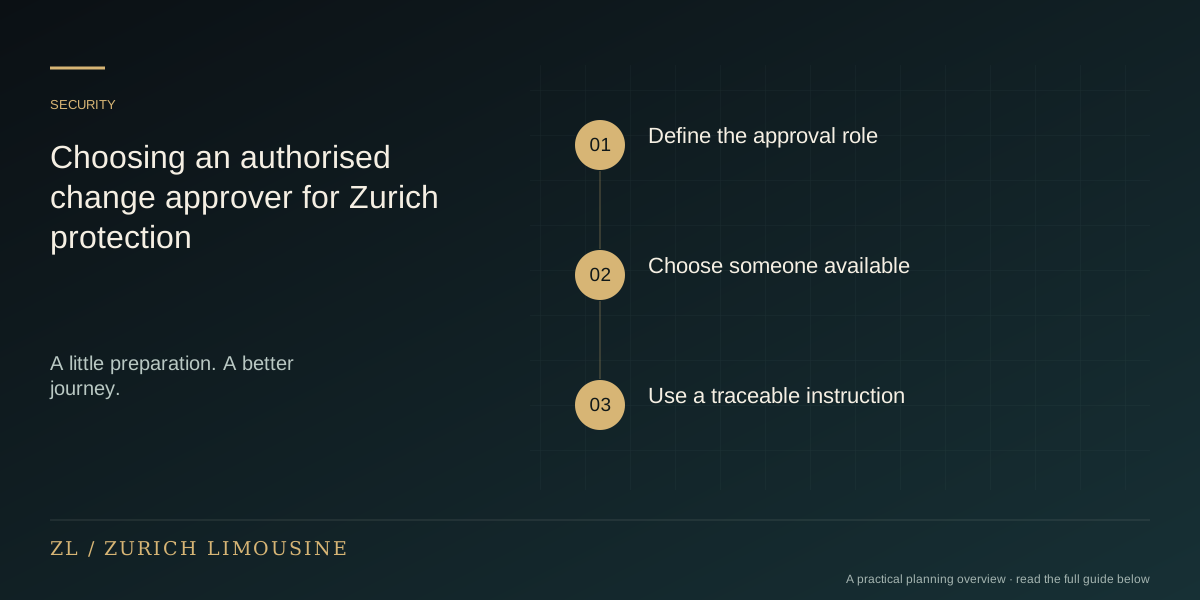
Define the approval role
Specify whether the contact can change locations, extend hours, add personnel or approve separate vehicle costs. These are different decisions and may have different company limits. Write the role in practical terms so the provider knows which requests can be accepted from that person and which require another authorisation. For example, authority to move a meeting does not necessarily include authority to add another guard to the booking.
Choose someone available
An approver who is in the same closed meeting as the principal may be difficult to reach. Provide a suitable backup and explain when that person may act. Share only the contact details needed for the booking, and make sure both contacts know that they have been nominated before the visit begins. The backup arrangement should be known to the provider rather than introduced for the first time during an urgent schedule change.
Use a traceable instruction
For a material change, send the revised details clearly and request acknowledgement. Include the booking reference and the intended effective time. A fragment of a conversation or a forwarded message without context can leave uncertainty about whether the client is proposing a change or approving an actual additional service. This also helps the finance reviewer distinguish an accepted extension from an option that was discussed but never booked.
Close the loop with the guest
Once the provider accepts the change, ensure the principal and relevant support staff receive the revised plan. The chauffeur may need a separate update if transport is booked independently. Keep one current itinerary so an approved extension does not coexist with an old release time in another team member’s calendar. If the guest receives updates through an assistant, confirm that the assistant has passed on the change before the next appointment.