
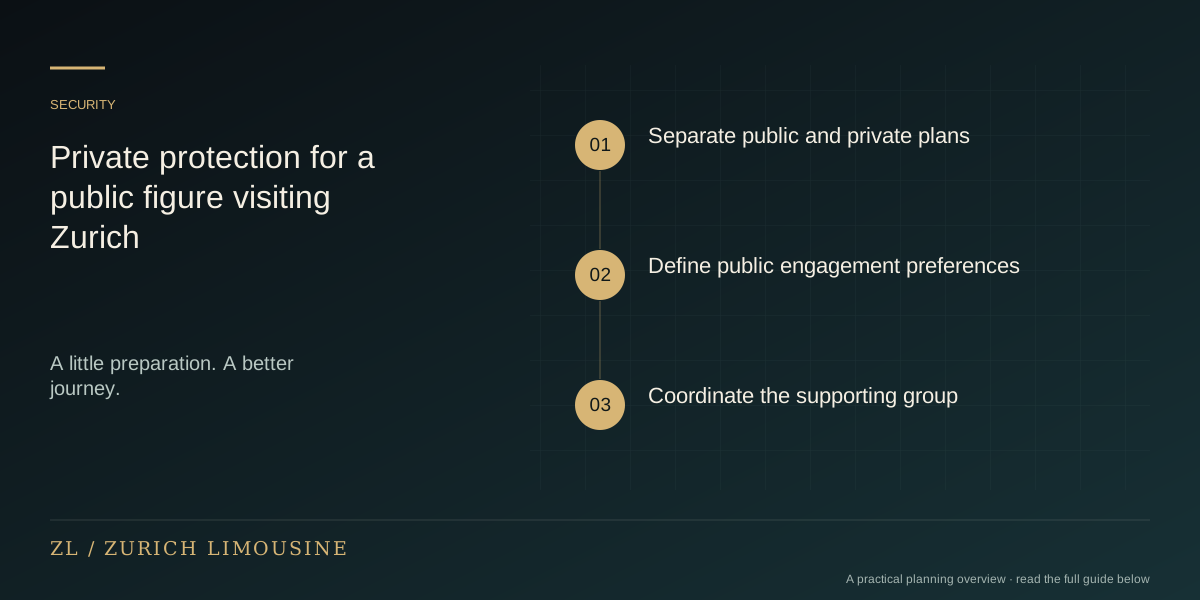
Separate public and private plans
Identify which appearances are publicly announced and which appointments remain private. Share only the scheduling information required for service delivery. The visitor’s representative should decide what is communicated externally; a transport or protection booking should not become a source of publicity about an otherwise private stay. If a public itinerary is already available, the representative should still provide a confirmed working schedule rather than expect the provider to reconstruct it from publicity.
Define public engagement preferences
Discuss how the visitor wants scheduled photographs, greetings and interviews managed by their own team. The protection professional should receive the relevant logistical decisions, not be asked to invent a media policy. Any change in public participation should be approved by the representative authorised to speak for the visitor. The visitor’s preferences may differ between an official appearance and personal leisure time, so describe those distinctions without disclosing unnecessary private background.
Coordinate the supporting group
An agent, assistant, stylist or communications adviser may be part of the travelling party. Confirm who travels together and who requires venue access. Personnel and vehicle capacity should be assessed separately, especially if members of the support team follow different schedules while the principal remains at an appointment. If the support team includes people travelling independently, provide the relevant meeting arrangements and avoid implying that they all remain under the same personal assignment.
Confirm scope without guarantees
Ask for written acceptance of the actual duties, dates and staffing. No private service should be described as eliminating every risk or granting unrestricted access. The confirmed plan should explain practical support, agreed hours and separate transport arrangements in language the visitor and their representative can both understand. A professional proposal should state its limits as clearly as its services, allowing the representative to arrange any additional specialist support through appropriate providers.