
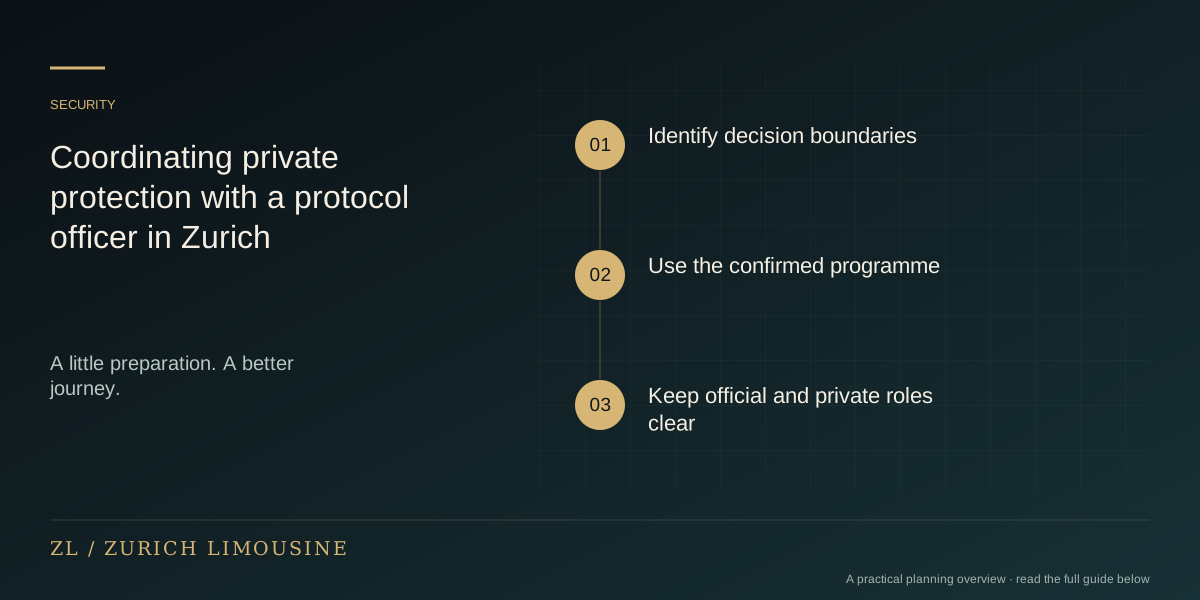
Identify decision boundaries
Clarify which decisions the protocol officer can approve and which belong to the principal, host or official protection team. This prevents a logistics update from being mistaken for authority to expand duties. Record the person responsible for commercial changes separately if they are not the protocol contact. Where the commercial approver is based abroad, establish a workable contact method and time availability so an urgent scheduling decision does not remain unresolved.
Use the confirmed programme
Request the relevant schedule, venue contacts and access instructions in their current approved form. Avoid circulating unnecessary official background material. Each update should state what has changed, when it takes effect and who approved it, with acknowledgement from the private provider for its part of the programme. If a programme update is confidential, use the communication method approved by the client and share it only with the people who need it.
Keep official and private roles clear
Private personnel should not be presented as official officers or given responsibilities they have not accepted. If coordination with public authorities is required, the authorised official team should lead it. The private service must remain within the reviewed duties and any permissions actually confirmed by responsible parties. The protocol officer can help explain the guest experience, but any specialist operational request still needs acceptance by the provider responsible for delivering it.
Agree a closing handover
Define when the private assignment ends and which organisation takes over the next stage. If the visitor’s programme extends, obtain confirmation of additional personnel hours and separate transport. A clear handover avoids an assumption that the private provider remains responsible after its agreed service period has finished. The closing record should state the agreed handover and final hours without including unnecessary official details in an ordinary invoice or broad email distribution.