
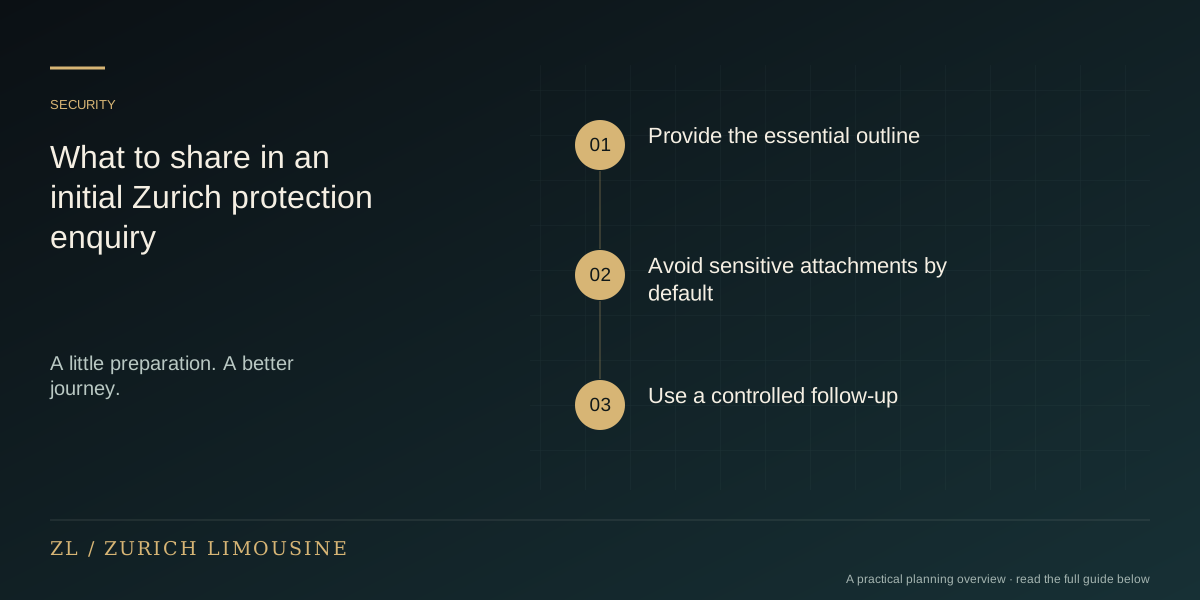
Provide the essential outline
State the Zurich start location, requested dates and times, number of people receiving support and broad programme. Include a working contact and any practical language or accessibility requirement. This is usually more useful for an initial availability review than a long personal history that does not describe the assignment. Include whether limousine transport is also requested, while keeping it identifiable as a separate service for review and pricing.
Avoid sensitive attachments by default
Do not upload passports, financial records, confidential meeting papers or detailed family information simply to make the enquiry appear complete. If the provider later requires a particular document for an agreed purpose, ask why it is needed and how it should be supplied through the appropriate process. A request for a particular item should have a stated purpose rather than an assumption that more documentation is always better.
Use a controlled follow-up
If the assignment involves sensitive circumstances, ask to establish a suitable follow-up conversation before sharing detail. Identify who is authorised to discuss the matter for the client. The booking form should remain a practical starting point, not a repository for every document associated with the visitor or company. The client can keep a brief reference to that follow-up in the itinerary without reproducing the sensitive discussion itself.
Keep distribution proportionate
Send the enquiry only to people involved in arranging or approving the service. A large email chain can expose personal schedules to recipients who do not need them. Once the scope is confirmed, use a concise operational brief and keep unrelated background material within the client’s own appropriate records. If a new organiser joins later, send the information relevant to their role rather than forwarding the entire historical conversation.