
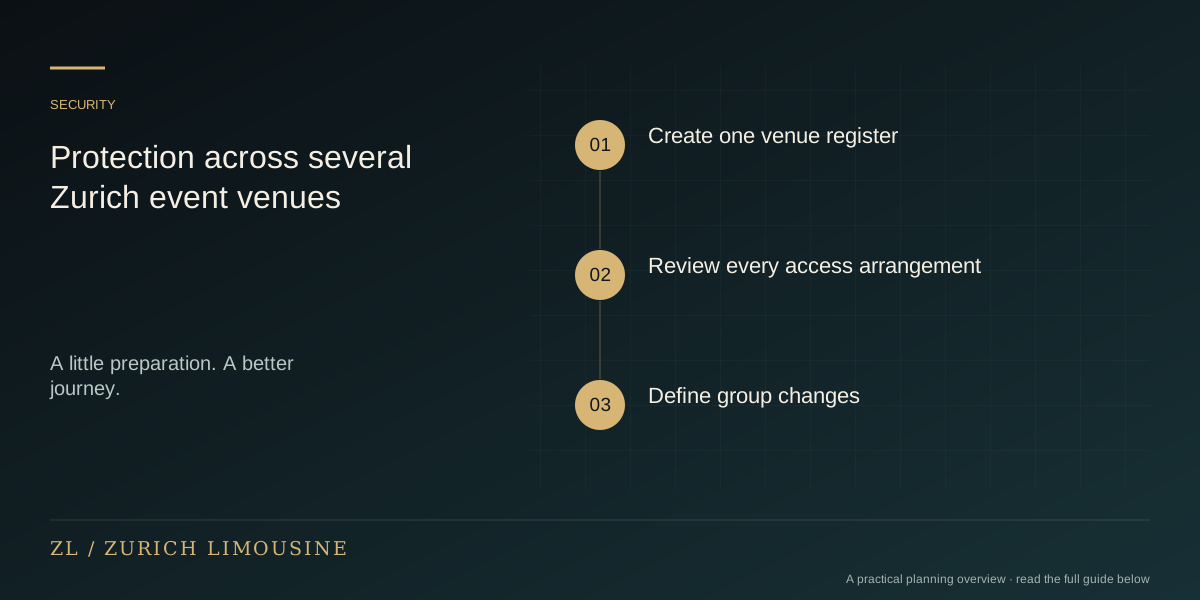
Create one venue register
List each venue’s full address, appointment time and authorised contact. Include the purpose of the visit and any registration requirements for the accompanying professional. Using a single register makes discrepancies visible, particularly when different organisers use informal names for venues or send separate calendar invitations. Mark an address as confirmed only after the relevant host has validated it; a venue name copied from a draft invitation may refer to another location.
Review every access arrangement
Permission at the first venue does not extend to the next. Ask each organiser to confirm its own guest and companion arrangements. If an activity is provisional, mark the related access as unconfirmed rather than assuming the protection professional can negotiate entry after the programme has already started. If an organiser changes a room within the same venue, check whether the existing companion permission still applies instead of assuming all areas are equivalent.
Define group changes
Guests may join or leave between venues. State whether the service remains with one principal or follows a group that stays together. If the programme splits into simultaneous activities, the provider needs to review staffing separately; a shared invitation does not make one professional available in two places. For guests who leave the programme early, agree whether the booked professional stays with the principal or is being asked to support a different person.
Keep transport coordinated
The limousine reservation should reflect the same venue sequence and timing as the protection brief. Use one authorised coordinator to communicate changes to both services. Confirm extra stops, waiting arrangements and additional personnel hours in writing so the end-of-day invoice can be understood against the agreed programme. The itinerary should show which changes have been accepted by both services, especially when a new stop extends the assignment beyond the originally agreed finish.