
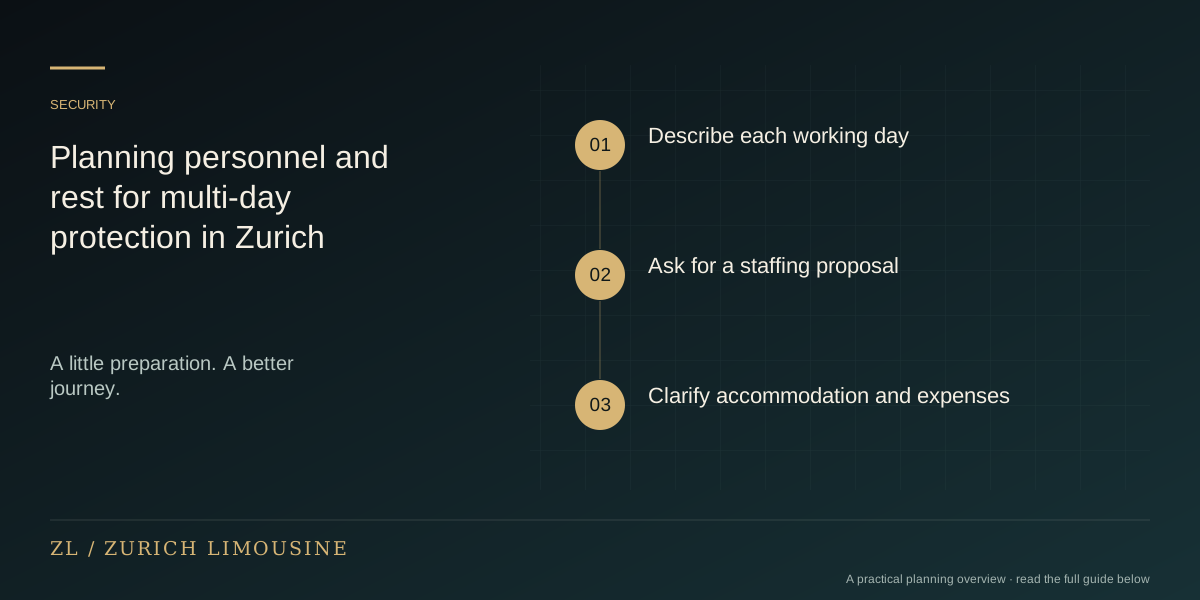
Describe each working day
Provide a day-by-day outline with the intended start, finish, locations and periods when support is requested. Distinguish a fully accompanied day from a morning arrival followed by an evening function. This helps the provider assess the actual requirement rather than interpret a calendar range as uninterrupted service. Add any period when the principal is unavailable for decisions, so the nominated coordinator can handle questions about the programme.
Ask for a staffing proposal
Request written confirmation of how the provider proposes to cover the agreed periods, including any change of personnel. Do not assume one guard can remain available throughout several days and nights. Any arrangements for rest, replacements and overnight attendance should be reviewed expressly as part of the accepted assignment. The client should know who is expected for each accepted period and how a personnel change will be communicated.
Clarify accommodation and expenses
If the programme requires personnel to stay away from their usual base, ask which accommodation, meals or other expenses need separate agreement. Do not insert an assumed allowance into the budget. The offer should state what is included, what is charged separately and who authorises any change to those arrangements. The person approving the visit should be able to distinguish the personnel calculation from any separately agreed travel-related expenditure.
Keep the Zurich connection clear
Identify the Zurich city or airport start and final handover, along with any travel during the visit. Personnel hours at CHF65 per guard and the eight-hour minimum remain distinct from limousine charges. Confirm how the minimum applies to the proposed schedule before treating a multi-day estimate as a final price. A departure from Zurich on one date and a later return should not obscure the actual hours requested between them.