
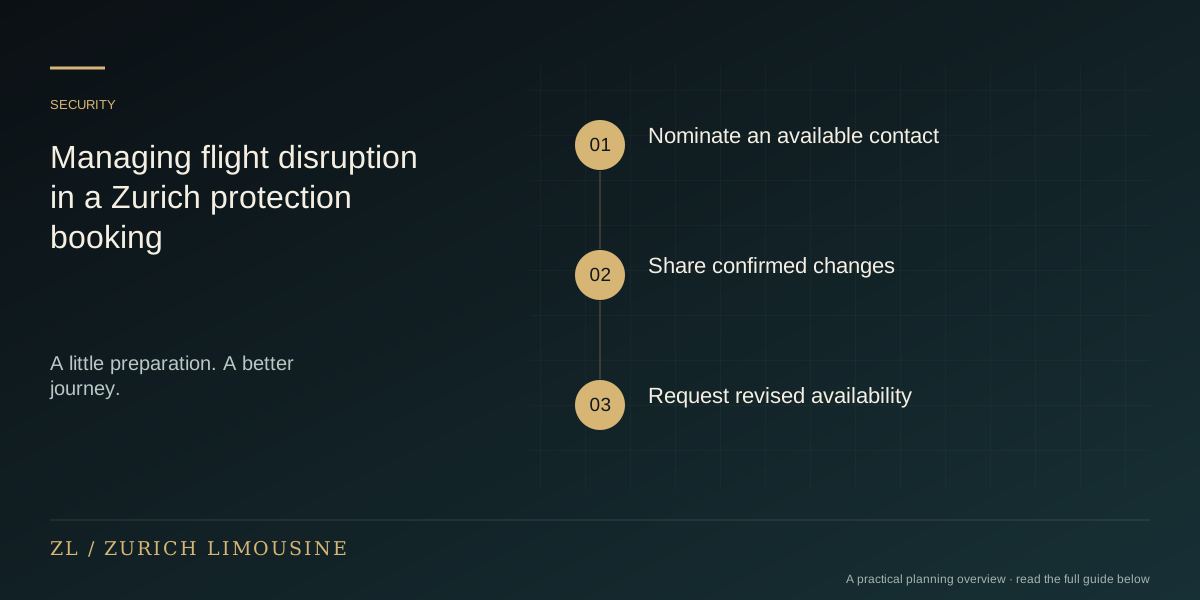
Nominate an available contact
Choose someone who can communicate while the traveller is in the air or dealing with the airline. Give that person the booking reference and authority limits. The coordinator should know whether they may approve extra hours, a revised hotel destination or a new date without waiting for the principal. If the coordinator has limited spending authority, provide a second authorised contact so a material change does not depend on someone who cannot approve it.
Share confirmed changes
Send the replacement flight number and revised arrival date as soon as they are confirmed. Distinguish an airline proposal from a ticketed change. A screenshot without a clear local date can be misleading, so repeat the relevant details in plain text and ask the service provider to acknowledge them. When the new flight involves a different airport, describe that explicitly and request review rather than assuming a Zurich arrival booking covers another location.
Request revised availability
A moved flight does not automatically move the same personnel to another day or night. Ask the provider to confirm the revised assignment and any commercial implications. Keep limousine changes separate but coordinated, because a vehicle and a protection professional may have different availability after the original appointment. The client should understand which parts of the original arrangement remain confirmed and which are pending, especially if accommodation and transport are also changing.
Document the final agreement
Retain the updated written confirmation and replace outdated calendar entries. If the visit is cancelled, apply the terms agreed for that booking rather than assuming a standard rule. The service record should show the accepted start, personnel count and hours so the invoice can be reconciled against the actual arrangement. Keep the original and revised confirmations together for reconciliation, while clearly marking which version governs the assignment that will actually take place.