
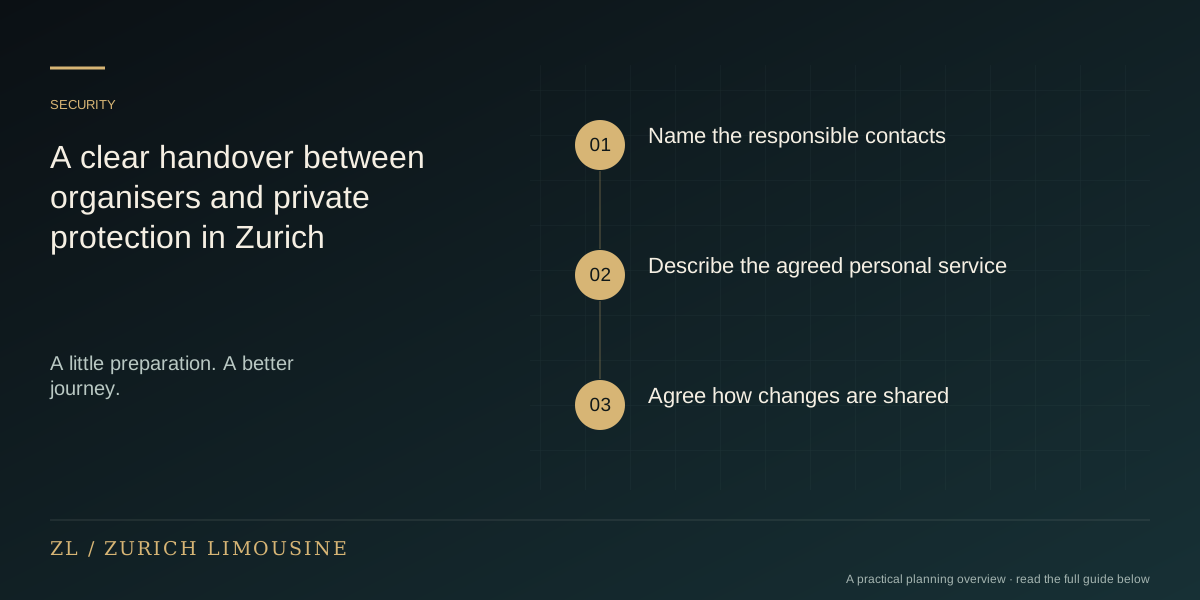
Name the responsible contacts
Identify the event manager, venue contact and client representative who can make decisions. Clarify which person handles admission, programme changes and guest preferences. Avoid giving a long list of names without roles; a useful contact sheet makes it clear who can answer a particular operational question. A backup contact can be useful when the event manager is occupied, but the backup should have an agreed role rather than merely a listed telephone number.
Describe the agreed personal service
Explain which visitor receives support and during which activities. Do not describe personal accompaniment as complete event security. The organiser should retain its own responsibilities for the venue and audience, while any additional duty requested from the private provider must be assessed and accepted separately. If the organiser asks for additional duties during the event, refer the request for review instead of treating a polite discussion as an accepted scope change.
Agree how changes are shared
Choose a practical channel for schedule updates and identify who acknowledges them. A stage announcement or informal conversation may not reach the chauffeur or client’s assistant. Send material changes as a clear revised instruction, especially when they affect the service finish or require access to a different area. Where several providers use different systems, a concise confirmed message may be clearer than expecting everyone to monitor an event-management platform they cannot access.
Close with a service review
After the event, review the handover against actual responsibilities and timing. Keep the record focused on the booking, not on unrelated guests or confidential event content. If future events are planned, record specific improvements such as earlier credential confirmation or a clearer final-release contact. Share the review only with people who need it for service improvement, and distinguish the private provider’s performance from matters controlled by the venue.