
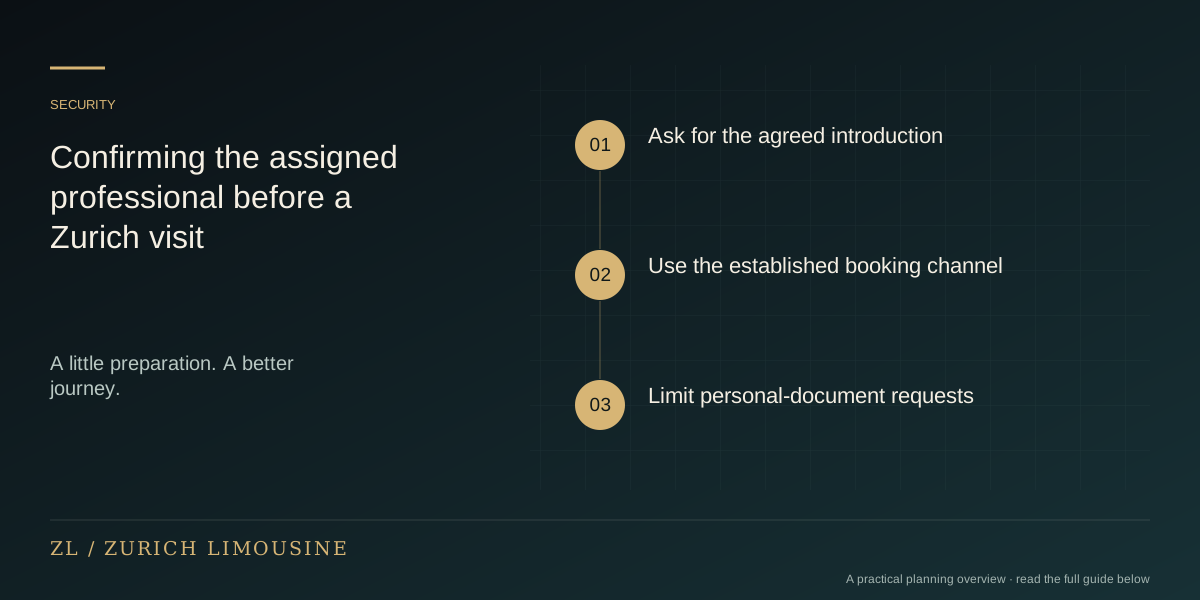
Ask for the agreed introduction
Before the assignment, request the introduction details the provider uses for its personnel. Confirm the meeting time, location and booking reference through the established contact. The guest should know whom they are expecting and how to reach the booking team if the arrangements do not match the confirmation. If the visitor is represented by an assistant, ensure the assistant has passed the current introduction details to the guest.
Use the established booking channel
If a new person contacts the guest claiming to be assigned, verify the change with the known coordinator rather than relying solely on the new message. Keep the process practical and respectful. This is confirmation of the service arrangement, not an invitation to conduct an intrusive private investigation into staff. The same approach applies if a venue or chauffeur receives a different name from the one shown in the current brief.
Limit personal-document requests
Ask the provider for evidence relevant to the assignment through its normal review process. Do not circulate identity documents or other personal records widely among reception teams and colleagues without an agreed need. Venue registration requirements should be clarified in advance so personnel information is handled through the appropriate contact. Give each host only the information needed for its confirmed registration process rather than forwarding the full personnel discussion unnecessarily.
Confirm substitutions clearly
If the provider proposes a replacement, request an acknowledged update and confirm any effect on the agreed service. Inform the guest and host contacts who need to know. A change of personnel should not leave an outdated introduction in circulation, particularly when several assistants or event organisers share responsibility for the visit. Keep the latest accepted introduction together with the booking reference so it can be checked without searching an old message chain.