
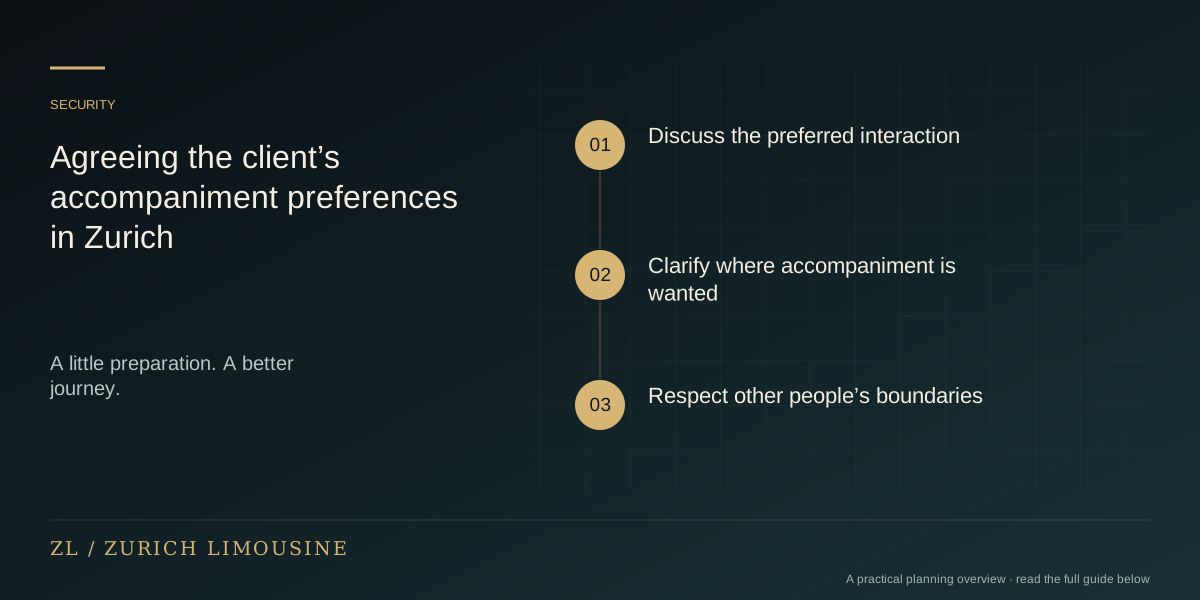
Discuss the preferred interaction
Ask how the client wants routine introductions, schedule updates and practical questions handled. Some visitors prefer communication through an assistant; others want direct contact. Record the choice and identify any circumstances in which another contact should be used, rather than relying on assumptions about seniority or public profile. If the client has a preferred form of address or introduction, include it alongside the routine communication preference in the brief.
Clarify where accompaniment is wanted
Describe the appointments and transitions for which the professional is requested. Distinguish those from private periods when the client wants a different arrangement. The provider should review the request and confirm the accepted scope, while the client understands that a preference does not automatically create venue access or additional staffing. For a private interval, agree how the client will contact the coordinator if they wish to resume the accepted programme.
Respect other people’s boundaries
The principal’s wishes do not determine the preferences of colleagues, hosts or family members. Explain who is receiving the service and obtain the relevant agreement for shared arrangements. Avoid treating everyone near the client as part of the assignment or collecting personal details about people who have no operational role. When colleagues join an appointment, identify whether they are simply travelling companions or specifically included in the confirmed service scope.
Provide a way to revise preferences
Agree how the client can raise a concern or request an adjustment during the visit. Use the nominated coordinator for material changes to scope, hours or staffing. A respectful feedback process allows practical refinements without leaving the working professional to interpret an ambiguous request as a completely new assignment. After an adjustment is accepted, update the current brief so the client does not need to repeat the same preference later.