
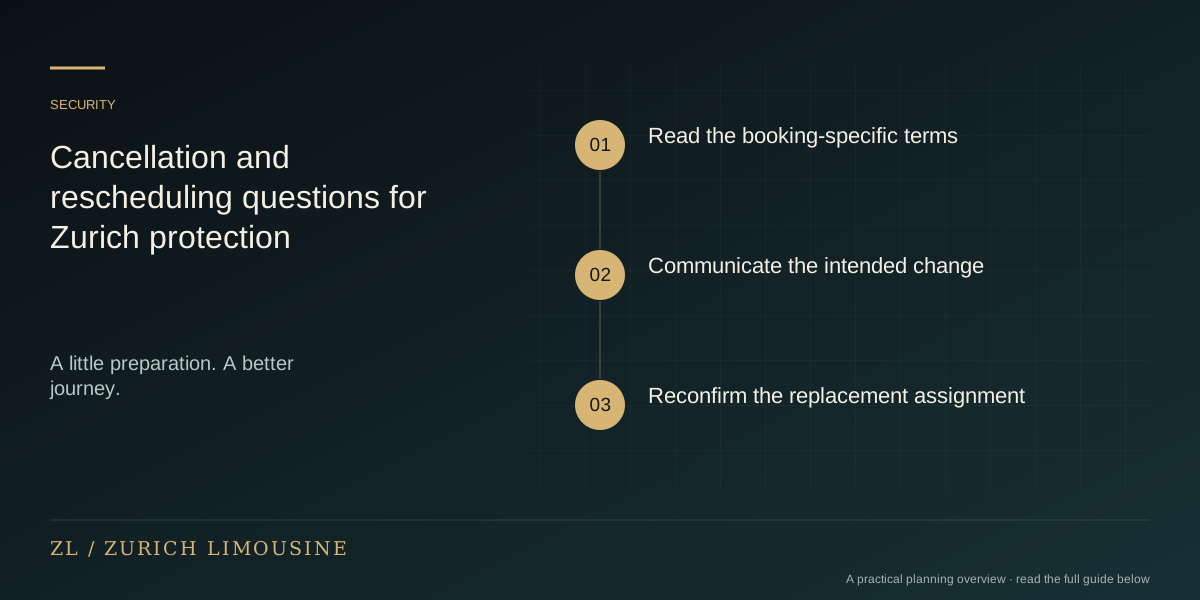
Read the booking-specific terms
Request the cancellation and rescheduling conditions attached to the offer you intend to accept. Check which dates, personnel and service periods they cover. Do not assume a general website enquiry establishes a refund rule or that terms from a limousine reservation automatically apply to the protection assignment. If more than one supplier is involved, review each confirmed agreement rather than assuming a single cancellation message settles them all.
Communicate the intended change
State whether the client wants to cancel, move the date, reduce the requested hours or change the number of guards. Those requests may have different implications under the agreed terms. Include the booking reference and ask for a clear response so the client knows what has actually been accepted. A reduced programme does not by itself remove the eight-hour minimum, so ask how the accepted terms apply to the request.
Reconfirm the replacement assignment
A new date requires availability review; it does not automatically retain the same personnel or arrangements. Provide the revised programme and obtain a fresh or updated written confirmation. Keep any minimum personnel charge and separate transport arrangements visible rather than assuming the previous total transfers unchanged to a different visit. The replacement confirmation should identify the new start, service period and contact rather than merely refer to a different calendar date.
Retain the final record
Keep the provider’s acknowledged cancellation or revised confirmation with the original booking. Inform the guest, assistant and any separately booked chauffeur of the accepted outcome. An internal calendar change is not evidence that the supplier has received or agreed to a cancellation, and silence should not be treated as confirmation. Where a company uses internal travel systems, update them after the supplier’s response so administrative records match the accepted outcome.