
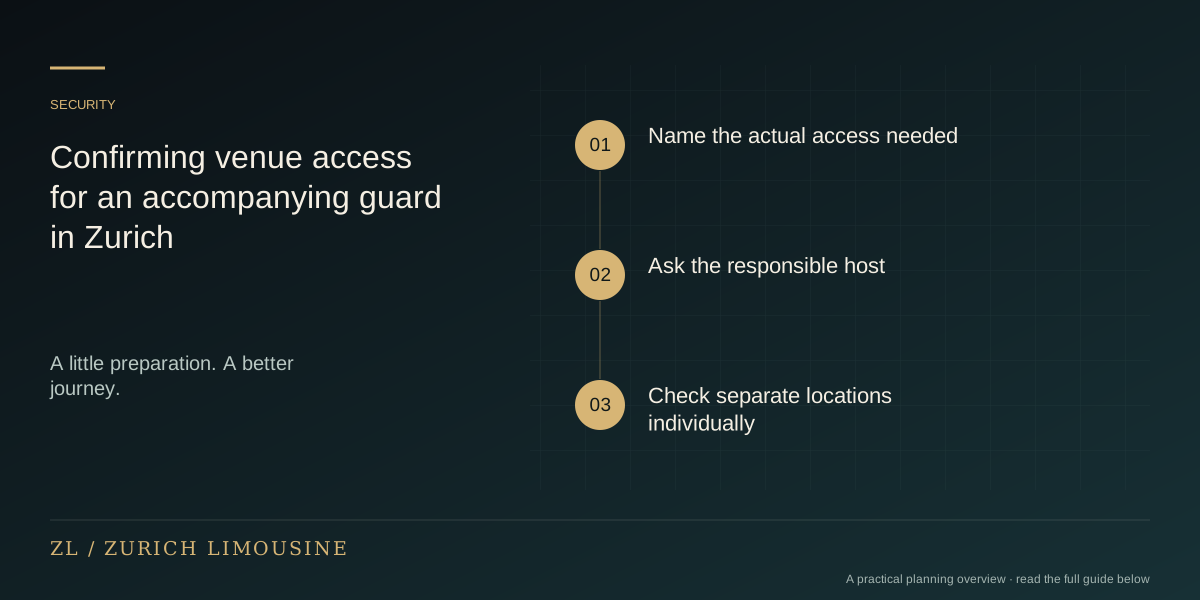
Name the actual access needed
Tell the host whether the professional is requested at reception, in meeting areas or in an agreed waiting space. Avoid using unrestricted access as a vague requirement. A precise description allows the venue to decide what it can permit and helps the provider assess whether the resulting arrangement meets the client’s needs. Include any need to accompany the visitor between separate rooms so the host can assess the actual request in context.
Ask the responsible host
Use the organiser, facilities contact or other person authorised by the venue to confirm access. The client’s preference alone is not the same as host approval. Record any registration or identification requirements in advance so the professional arrives with the information the venue has actually requested. If the host requires advance registration, ask when the relevant information must be supplied and who will acknowledge receipt.
Check separate locations individually
A hotel, office and conference venue may each have different arrangements. Approval at one place does not settle the others. Keep a short venue register showing the named contact and confirmed accompaniment arrangement, especially when several assistants or local hosts contribute to the same itinerary. A simple status such as confirmed or awaiting host response is more useful than an unqualified tick beside every venue.
Resolve limitations before arrival
If a venue cannot provide the requested access, discuss an alternative with the client and provider before the appointment. Do not promise the guest that the issue will simply be solved at reception. The accepted service scope should reflect the permissions actually available, with any unresolved requirement clearly identified. Keep the guest informed of the accepted arrangement so their expectations remain consistent with the service the provider can deliver.